ONE Denver's Analysis Of DLCP's Entertainment Licensing Policy Proposal
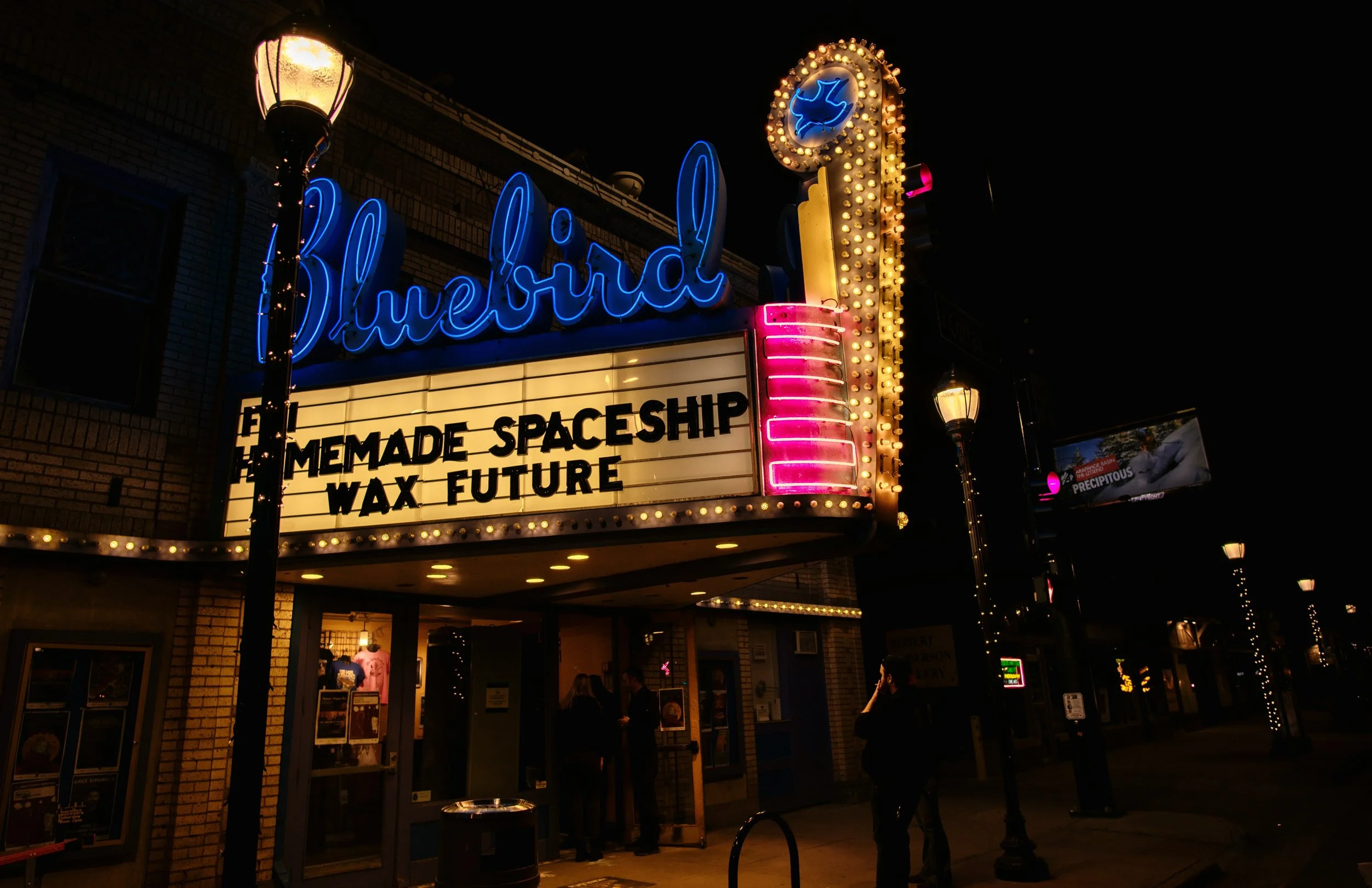
Photo by mana5280 on Unsplash
Update: April 29, 2026, 1:20PM. The draft’s definition of “nightclub manager” is overly broad and may unintentionally include promoters, marketing staff, talent buyers, and other limited-scope roles. We support assigning liability to nightclub managers, but only where individuals have true operational control over the venue. This will be addressed in Point 16.
Update, 4/116/26, 5:10 PM: We missed a major line in this draft since it occupied so little space. Nightclubs and adult entertainment businesses can stay open until 4 a.m. They will not be able to sell alcohol as that is determined by the state. This is a public safety measure, believe it or not. Please refer to point 15 in this anaylsis for our full thoughts.
Update, 4/13/26, 3:27 PM: We spoke with Molly Duplechian, Executive Director at DLCP, and they assure us that their intentions are to create an atmosphere where there are less businesses needing licenses than the current structure and that there will be grace periods, and pre-application processes. They do not intend for bottlenecks. They also espoused that they intend to have more exemptions. They recognize that this is a first draft and would like community input on how to help them accomplish their goals. They also said they are willing to meet with ONE Denver to fill some of these gaps. Until those are addressed in text, we believe that the following analysis is prudent; however, many of the problems we found are ones they do not intend to be. We didn't have time to go through it all with them; however, we will be meeting with them to discuss more details. We still recommend voicing your opinions to them and becoming active participants in the process.
Update, April 14 2026, 1:52PM: The following are DLCP’s own words, which we are adding to this analysis to provide additional context:
- There will be an opportunity for current cabaret or amusement licenses to have a smooth transition into this new license framework. A licensee can apply for renewal as early as 90 days prior to their expiration date. Businesses that currently hold a cabaret license or amusement license will just need to apply for the new entertainment license type, if any, that matches their business model as they approach the expiration date of their current cabaret or amusement license. Those dates are spread throughout the year so we don’t expect there to be a bottleneck that will create a backlog for DLCP. Under the current proposal, this will occur throughout 2027 as licenses approach their expiration date.
- Regarding some of the proposed changes for hearings, we anticipate this proposed process to be much faster and less burdensome than the current hearing process for all cabaret licenses. The current process necessitates holding a needs and desires hearing for every single cabaret license. The proposed process will result in only holding public hearings if there are relevant and substantial requests made for a hearing from parties in interest (RNOs, business owners within the designated area, etc.) We made this change for liquor and marijuana in 2025 and are seeing very few new applications where hearings are being requested. Additionally, the proposed hearing process does not “shift the burden of proof onto the venues”. The burden of proof has always been on the applicant for both liquor and cabaret hearings, so this is not a change from current practice. It is also standard and best practice in licensing that the burden of proof is on the applicant to show that they meet the requirements of the license, including (when applicable) that the license meets the preferences and interests of the neighborhood or that it will not adversely impact the neighborhood and community.
The Department of Licensing and Consumer Protection (DLCP) released its draft for the ordinance that could replace the current cabaret structure. You can read the draft here.
You can voice your opinions to DLCP at this email: DLCPpolicy@denvergov.org
ONE Denver are not lawyers nor have we consulted with lawyers on this due to the very short timeframe between draft release and public comment. This commentary period takes place between April 15th and the 17th, for only a couple of hours. You can view the public comment schedule and take their feedback survey on DLCP’s site (more on the feedback survey later in this introduction).
Instead, ONE Denver are nighttime economy advocates. This is our opinion based on our non-legal interpretation of the text. None of this should be taken as fact. Please consult with an attorney.
Additionally, we recommend that you read DLCP’s draft carefully and try and find context that we missed or misinterpreted. We wish we had more time with it, but alas, with a short time frame for comment, we wanted to get our opinion out as quickly as possible. Therefore, there may be some gaps and misunderstandings. Input would be appreciated greatly.
In DLCP’s own language:
“The Department of Licensing and Consumer Protection (DLCP) is developing a proposal to streamline the cabaret and amusement facility licenses into three new license types: Limited Entertainment Business, Nightclub Entertainment Business, and Adult Entertainment Business. The proposal aims to regulate entertainment separately from liquor. This proposal requires an ordinance to be passed by Denver city council and signed by Mayor Johnston."
We are honored that DLCP approached us to share best practices from respected cultural cities across the United States and internationally, which have adopted nighttime economy best practices. You can view the recommendations we made to DLCP here.
In their communication with us and other entities, they espoused a desire to modernize the code, expand entertainment opportunities, improve vibrancy, and cut red tape while keeping neighborhood concerns in mind.
However, as it stands, we believe it falls short of this goal and may have the opposite effect in some instances.
This community input phase, which they seem open to, can hopefully get it to a point that accomplishes the department’s stated goals, as we look to industry best practices to help them refine it into a framework that meets DLCP’s stated intentions.
We agree with the department’s stated goals and believe that they wish to get there. We only diverge on “how.” We understand that they are under no obligation to take our advice and that they understand the nuances of the city’s entertainment, being the department that oversees it.
We also understand that we are not code experts, and that we may misconstrue certain definitions, or not fully understand the mechanisms of why they have to implement policy in this way. If these can be explained, then we welcome them. So far in our interactions with them, DLCP has been transparent.
We only know what models we have observed working around the United States, and in select international cities with a similar culture.
However, as you will see, some potential issues could arise from their current language. We also believe it doesn’t do much to increase entertainment offerings, culture, or vibrancy within the city as well. If anything, it may put certain cultural spaces in a quasi-defined space, making it questionable if they are allowed to operate without one of these broad-reaching entertainment licenses.
This is not a critique of the department as a whole, but rather one that is necessary when examining something that impacts so many people, from business owners to residents to visitors and beyond.
They ask for feedback on some of these concerns on their feedback survey (open until June 1), but overall, the survey doesn’t cover anywhere close to the full breadth of the proposal. Therefore we recommend emailing them at the email address above to voice your opinions.
The following are our non-legal opinions on DLCP’s draft.
-
Current cabaret license holders will be required to reapply and go through the new process. There doesn’t appear to be provisions for grandfathered-in venues (except for the ability to reuse inspections), nor is there a provision for application before the venue's license expires.Current cabaret license holders will still be required to reapply and go through the new process. After speaking with DLCP, they told us they plan to allow venues to apply up to 90 days in advance of their current license expiring and that they do not expect administrative backlogs as a result. However, venues will not be grandfathered in and will have to incur costs of navigating and applying for the new license
This could result in venues having to close their doors while they wait for their new license to be approved.Since every venue will be required to reapply once its cabaret license expires, it could create a backlog within DLCP, resulting in bottlenecks while venues are closed waiting.On top of potentially having to shutter while their license gets approved
(in an administrative bottleneck), venues will have to incur the costs of reapplying for a license they already had, potentially including new attorney and other contracting fees to interpret the new rules, which we believe are vague and ill-defined. This doesn’t include costs incurred by products that could spoil, employees who will quit and need to be rehired, plus unavoidable costs, like rent, taxes, and utilities.Draft text:
“Article III of Chapter 6 shall be repealed, effective January 1, 2027. Upon repeal, no cabaret licensee will be permitted to operate past the expiration date on the face of their license and will be required to apply for a new license as applicable, pursuant to Chapter 7.”
“(a) Inspections and permits. Unless provided for otherwise, the manager shall not issue entertainment business licenses until the applicant has completed all required inspections and received all necessary permits, including, but not limited to, right-of-way permits, zoning permits, and fire and building permits. An entertainment business license may be issued if the applicant can establish that it has already passed inspections or re-inspections, pursuant to policy determined by the Department. However, the manager, in their discretion, may require that the applicant again undergo inspections.”
The discretionary, vague nature of DLCP manager decisions, and “policy determined by the Department” without clear guidance, could allow for bias and confusion in the application process.
Nighttime best practices dictate that definitions must be clearly defined and there must be limited discretion and bias, which allows for the input of personal, ideological beliefs, rather than procedural neutrality.
-
The draft forces relicensing without creating a bridge for existing venues. The ordinance requires current cabaret holders to apply for a new license, but it does not appear to provide a transition mechanism that allows them to keep operating while that application is pending.The draft still forces relicensing for existing venues. However, after speaking with DLCP, they told us they plan to allow venues to apply up to 90 days before their current license expires, which they intend to use as the transition mechanism between expiring licenses and new approvals.
Draft text:
“Article III of Chapter 6 shall be repealed, effective January 1, 2027. Upon repeal, no cabaret licensee will be permitted to operate past the expiration date on the face of their license and will be required to apply for a new license as applicable, pursuant to Chapter 7.”
This language requires relicensing, but does not appear to provide:automatic conversion,a clear advance-application right,DLCP has since told us they plan to allow a 90-day advance application window, though that process is not spelled out in the draft text itself.a temporary operating permit during review,or guaranteed continuity while DLCP processes the application.
That means an existing venue could lose the ability to operate simply because its old license expires before DLCP finishes approving the new one. In our opinion, that is a major flaw in the draft.The ordinance does not just require relicensing; it appears to require relicensing without a continuity mechanism.Importantly, DLCP does provide a mechanism for venues to use their previous inspections, so they will not have to do those again.
However, the manager has discretion to require applicants to undergo inspections again without a clearly defined procedural requirement by the manager. This procedure may be in another policy of theirs, but we aren’t directed to it in the ordinance draft, so we have no way of interpreting it.
Draft text:
“…An entertainment business license may be issued if the applicant can establish that it has already passed inspections or re-inspections, pursuant to policy determined by the Department. However, the manager, in their discretion, may require that the applicant again undergo inspections.”
-
Neighborhoods have significant power under the new framework, and we believe that the process is too discretionary. Neighborhood safety and approval is paramount; however, it needs to be clearly defined, and the burden of proof needs to be on the appropriate parties.
The text says:
“A public hearing may be required prior to the issuance of an entertainment business license. A public hearing shall be required upon the receipt of relevant substantial requests from parties in interest in the neighborhood under consideration.”
It goes on to say:
“Before entering any decision approving or denying the application, the manager may consider the facts and evidence adduced as a result of their investigation and the public hearing required by this section and any other pertinent matters affecting the qualifications of the applicant, including:
a. The preferences of the adult inhabitants therein as evidenced by petitions, neighborhood agreements, letters, affidavits, or otherwise;
b. The number and severity of noise violations committed at the location to demonstrate whether the location is capable of mitigating sound disturbances to the neighborhood;
c. Previous violations by the Applicant;
d. Whether the issuance of the license will adversely affect the public interest, including the health and safety, of the immediate neighborhood in which the business is located;
e. The provisions of this article I and chapter 32 of this Code, or any rules and regulations adopted pursuant thereto.”Then the denial section says:
“In addition to the grounds set forth in Chapter 32 of this Code, any application submitted pursuant to this article I shall be denied if:
...
(2) Where a hearing is held, the manager determines after reviewing the entire record, that the applicant has failed to prove by a preponderance of the evidence that the preferences of the adult inhabitants in the neighborhood support the issuance of an entertainment facility business license;”
This puts the burden of proof on the business rather than the neighborhood, levying complaints. The applicant bears the burden of proving qualifications at hearing, and denial can follow if the applicant fails to prove neighborhood support by a preponderance of the evidence.
Nighttime economy best practices support ordinances that are clearly defined and unambiguous. While the input of neighborhoods is critical, as cities are for people to live in, and safety is always a critical concern when dealing with alcohol and revelry, the shift of the burden of proof onto the venues, and murky definitions could result in issues.
Update, April 14, 2026, 1:52PM: Refering to the comments made by DLCP posted at the top of this analysis, DLCP says that the burden of proof hasn't been shifted and that it has always been on the venue. They say that it is best practice to prove that they are in compliance with the license. We do not debate that. Licensees should have to show why they fit the requirements of the license. The part that we debate is that neighborhoods should have to provide evidence that the venue is bad for the neighborhood, rather than saying it's bad for the neighborhood, providing no evidence, and then requiring the venue to prove they are good for the neighborhood, despite no evidence showing that they are actually bad for the neighborhood. We are not saying that this will happen, but there shouldn't be the posibility of it. -
The ordinance contains procedural deadlines but removes any consequence for the city missing them. In practice, that means the process has no meaningful outer time limit. Timelines for approval allow for managerial discretion that can be applied unfairly based on the personal bias of the case manager.
With a possible impending bottleneck created by the forced reapplication of all current businesses holding a cabaret license, this could create an atmosphere where venues are forced to close while their application is processed. Venues will have to rehire employees, pay rent, and other unavoidable business expenses while they get approved for something they were already approved for under the current cabaret model.
With no clearly defined timeline for approval and discretionary bias built into the language, this could create a burden for cultural spaces.
Here is the draft language:
“A public hearing may be required prior to the issuance of an entertainment business license. A public hearing shall be required upon the receipt of relevant substantial requests from parties in interest in the neighborhood under consideration. All such public hearings shall be subject to the following provisions:
(1) No less than thirty (30) days prior to the public hearing, the department shall post public notice of the hearing by publication in a manner determined by the department in rule. Public notice shall also be given by the applicant by posting a sign at the proposed premises that meets notice standards in department rule.
(2) No less than ten (10) days prior to the public hearing, the manager shall designate the neighborhood being affected by such application. The designation of the geographical extent and boundaries of such neighborhood shall be determined according to department policy.
(3) No less than five (5) days prior to the date of hearing, the manager shall make known the manager’s findings based on the manager’s initial investigation of the application documents in writing to the applicant and other interested parties. The failure of the manager to make these findings known five (5) days prior to the date of the public hearing shall not preclude the manager from later determining that the application should be approved or denied.
…
(6) Unless additional time is necessary to fully investigate an application, any decision of the manager approving or denying an application shall be in writing stating the reasons therefor, within thirty (30) days after the date of the public hearing, and a copy of such decision shall be sent to the applicant at the physical or electronic address shown in the application. The failure of the manager to issue a final decision within thirty (30) days after the date of the public hearing shall not preclude the manager from later determining that the application should be approved or denied.”
What we interpret this as meaning:
- There are procedural deadlines tied to the hearing process.
- Notice must go up at least 30 days before the hearing.
- Neighborhood designation must happen at least 10 days before the hearing.
- Initial findings are supposed to be provided at least 5 days before the hearing.
- A written approval or denial is supposed to come within 30 days after the hearing, unless more time is needed to fully investigate.
Additionally, there is no automatic license approval language if DLCP fails to meet its own deadlines. In fact, the text says the opposite: missing the deadline does not prevent DLCP from deciding later. This means venues could be stuck in limbo as they wait for the administrative bottleneck to disappear.
Here is the text supporting that:
“The failure of the manager to issue a final decision within thirty (30) days after the date of the public hearing shall not preclude the manager from later determining that the application should be approved or denied.”
This allows for a prolonged and discretionary departmental bottleneck, rather than a clearly defined process and timeline for approval.
Clearly defined processes and timelines are a cornerstone of modern nighttime economy best practices.
-
The draft repeatedly says core things will be governed by department rule or policy:
- notice standards in department rule,
- neighborhood designation according to department policy,
- video surveillance as determined by department rule,
- security guards as provided in department rule,
- records required by department rule,
- additional documentation as the manager may require,
- inspections and re-inspections under department policy.
That means the ordinance itself does not fully specify the rules for businesses. It leaves key burdens to later administrative design.
If there are rules that surround it in another document, they should be clearly mentioned in the draft to allow businesses to interpret them without confusion.
-
The “public interest” and “adversely affect” language is vague and expandable.
The draft says:
“Whether the issuance of the license will adversely affect the public interest, including the health and safety, of the immediate neighborhood in which the business is located;”
“The applicant has previously operated a similarly licensed premises in a manner that adversely affects the public interest, including the health and safety, of the immediate neighborhood in which the business is located;...”
While venues should operate with the public interest and safety in mind, these definitions are broad and vague. Nighttime economy best practices dictate that definitions should be easy to understand and leave little to the imagination.
-
Update: April 29, 2026, 11:55AM: DLCP says that they plan on switching the language from complaints to violations.
The draft allows complaints regarding noise to contribute to license reclassification from a limited entertainment license to a nightclub one, even where the text elsewhere refers more specifically to violations. This is a contradiction that creates a pathway for compliance-driven regulatory escalation rather than standards tied only to defined noncompliance.
The draft says:
“...A nightclub license shall also be required for any other type of facility, as determined in the discretion of the manager, that offers entertainment and has exhibited a pattern of criminal behavior with arrests, complaints regarding noise, or criminal intent that is related to disorderly conduct, drugs, weapons, or other criminal activity disguised as a legitimate business”
Noise complaints are not the same as violations. This allows hostile neighbors or coordinated political entities to reclassify businesses into different licenses based on their ability to lobby complaints, regardless of validity. This could stifle venues whose political or social ideologies they don’t agree with and burden them with undue costs and procedures.
The discretionary nature of DLCP case managers allows for their personal opinions to influence approval, rather than adhering to a clearly defined checklist.
-
The definition of
entertainmentlive entertainment is extremely broad and ill-defined.Draft text:
“Entertainment means any activity that a person can watch, listen to, or participate in; or activity that is conducted for the purposes of holding the attention of, gaining the attention of, or diverting or amusing guests or patrons.”
“Live entertainment shall mean and include, but are not limited to, all shows, live music, games of sport, performances by a disc jockey, and performances of any kind but shall not include adult entertainment or unamplified or spoken performances by a single performer, ambient or background music, or emceed audience games such as bingo or trivia.”
In our opinion, “Any activity that a person can watch, listen to, or participate in” is so broad it invites overreach.After speaking with DLCP, they pointed out that the draft is not intended to regulate all entertainment in the abstract, but rather defined categories of entertainment businesses, with “live entertainment” doing much of the work in the ordinary licensing framework. We appreciate that clarification.“Performances of any kind” is also very broad. This results in uncertainty.That said, we still believe the definition of “live entertainment” is broad enough to create uncertainty. Phrases like “performances of any kind” leave substantial room for interpretation, especially for lower-impact businesses and cultural spaces that may host occasional programming without thinking of themselves as conventional entertainment venues.This uncertainty can result in cancelled events, reduced experimentation, and attorney fees for venues
that are trying to navigate this vaguely defined landscape.and cultural spaces trying to determine whether their programming falls into one of the licensable categories.A rather hyperbolic, but still relevant example is that under this definition, you may need to register for an entertainment license if you have a TV that “a person can watch, [or] listen to.”All businesses that provide live entertainment will now be required to get one of these licenses. The draft explicitly regulates entertainment independently of other licensed activity, which appears broader than the prior cabaret structure and could pull in venues and spaces that historically didn’t serve liquor and thus operated outside cabaret-style licensing, such as DIY, cafes, galleries, and youth spaces.
It is ONE Denver’s opinion that these low-impact places are the lifeblood of emerging culture, which eventually becomes the talent pipeline for established venues.
Now, under this new framework, it seems like all entertainment is now government-regulated.Our concern is narrower than we initially stated, but still significant. The issue is not that literally all entertainment is regulated. The issue is that the draft appears to regulate live entertainment activity through broad language, without enough exemptions or enough clarity about what kinds of spaces and programming are meant to be captured.Draft text:
“The purpose of this article I is to exercise the authority of the City and County of Denver to regulate entertainment businesses through the licensing requirements set forth herein. The intent of this article I is to consolidate code provisions relating to the licensure and regulation of entertainment business in a single framework, regardless of whether other activities requiring licensure are being conducted by the licensee.”
This language is broad, aggressive, and anti-cultural, in our opinion. It feels like a way for the government to monetize all culture, rather than expand and improve it.
In our opinion, this language still reflects a broad expansion of the city’s regulatory reach over live-entertainment-related activity, even if it is not intended to regulate all entertainment in the abstract.We believe there should be more explicit exemptions and more precise clarification around “live entertainment,” particularly for lower-impact spaces such as cafés, galleries, bookstores, community arts spaces, youth-oriented cultural spaces, and other hybrid venues that may host occasional performances without operating as conventional nightlife businesses.
After speaking with DLCP, they pointed out to us where we were mistaken: the draft does not appear to regulate all entertainment in the abstract. Our narrower concern remains that the ordinance defines “live entertainment” broadly enough that businesses and cultural spaces may still face uncertainty about whether their programming falls within one of the licensable entertainment-business categories.
-
The draft’s broad definitions can spill beyond conventional venues into hybrid and nontraditional cultural spaces.
Draft text:
“Entertainment means any activity that a person can watch, listen to, or participate in; or activity that is conducted for the purposes of holding the attention of, gaining the attention of, or diverting or amusing guests or patrons.”
“Live entertainment shall mean and include, but are not limited to, all shows, live music, games of sport, performances by a disc jockey, and performances of any kind but shall not include adult entertainment or unamplified or spoken performances by a single performer, ambient or background music, or emceed audience games such as bingo or trivia.”
“The following activities and facilities do not require a limited entertainment license:
a. Amusement parks and water parks;
b. Athletic facilities such as health clubs, gyms, sporting arenas, ice rinks, and swimming pools;
c. Movie theaters;
d. Facilities owned, rented, leased, or operated by the city or its agents or agencies, or operated on city property by concessionaires or contractors under contract with the city;
e. Facilities owned or operated by School District No. 1 or a state-accredited private school or academy; or
f. Facilities owned or operated by a state-accredited college or university.”In our opinion, this creates uncertainty for spaces such as museums, rehearsal rooms, dance studios, art spaces, community cultural rooms, multidisciplinary creative venues, all-ages spaces, workshop/performance hybrids, and experimental venues. These spaces are often not conventional nightlife businesses, but under the draft’s broad definitions, they could still be interpreted as offering “entertainment” or “live entertainment.”
This matters because culture does not emerge only from bars and clubs. It also develops in hybrid spaces that combine rehearsal, education, performance, community gathering, and experimentation. If those spaces are pulled into an unclear licensing regime, the result is not just a burden on venues. It is a burden on the broader cultural ecosystem that feeds more established stages in the first place.
In our opinion, if DLCP intends to regulate nightlife, the ordinance should clearly distinguish between conventional entertainment businesses and lower-impact hybrid cultural spaces that are not the same thing.
-
Nightclubs must hire licensed security and implement weapons screening.
On its surface, we believe this is a good policy. Patrons and neighborhoods need to be safe. We believe that safety is paramount to the proliferation of culture within a city since activation of areas is shown to increase safety in many cases. However, due to the vague definitions of nightclubs and procedures, this could incur costs and create classifications that are unsustainable for smaller venues. Larger venues may be able to absorb the costs, creating an ecosystem where big players can thrive while smaller ones are pushed out of an already expensive market.
Last, but certainly not least, this changes the entire feel of venues. Heavy entry screening can be appropriate in some settings, but standardization risks atmosphere and culture. This can be especially damaging for underground, arts-oriented, and culturally niche venues that historically have not had problems with violence. This can damage a business’s brand and result in a loss of revenue. With margins already being tight and costs being high in Denver, this policy is not pro-nighttime economy.
Draft text:
“Security guard requirements. Nightclubs shall hire and maintain properly licensed security guards as provided for in department rule.”
“Weapons screening. Nightclubs shall implement and maintain reasonable measures to screen patrons for weapons as a condition of entry. Such measures may include, but are not limited to, the use of metal detectors, bag checks, or pat-down searches conducted by licensed security guards.”
-
The common-ownership requirement restricts flexible operating models and adds red tape.
The draft imposes a common-ownership requirement on certain co-located nightclub operations.
Draft text:
“(f) Common ownership – required. Nightclubs that propose to locate with a marijuana or liquor licensed establishment, as permitted by law, must maintain identical ownership structures. Nightclub licensees may not lease or subcontract the operations of the facility to a third party, if that third party does not also hold an identical ownership stake in the co-located entity. If the co-located entity has a change in ownership or corporate structure, the new entity must apply for a new nightclub license.”
In our opinion, this is not a pro-nighttime economy policy.
It may make enforcement simpler for the city, because it creates a clearer single line of accountability where a nightclub is co-located with a liquor-licensed or marijuana-licensed business. But it does so by restricting flexible operating models that are common in nightlife and cultural programming.
Under this language, a business appears to be barred from leasing or subcontracting nightclub operations to a third party unless the ownership structure is identical. That could make it harder for bars, restaurants, and other licensed spaces to work with outside promoters, operators, or cultural programmers who do not share the same ownership structure
In our opinion, that reduces flexibility, increases transaction costs, and limits the kinds of partnerships through which entertainment opportunities often emerge. It also creates another relicensing trigger, because if the co-located entity changes ownership or corporate structure, the new entity must apply for a new nightclub license.
That is not cutting red tape. It is adding structural rigidity.
A city that wants to expand entertainment opportunities should generally make room for responsible partnership models, shared-space arrangements, and outside programming relationships, while still preserving clear accountability for safety and compliance. This provision instead appears to require ownership uniformity as a condition of operation, which is a blunt tool that likely favors larger, vertically integrated operators over smaller and more independent cultural actors.
-
The draft expands venue responsibility beyond the premises and uses vague geographic language.
In our opinion, it is reasonable for businesses to bear responsibility for keeping their actual premises safe, including leased outdoor areas, parking lots, and adjacent spaces that are part of how patrons enter and use the venue.
The draft does define “premises” broadly:
“Premises shall include all indoor and outdoor areas specified in the license, any parking lot(s) or open public area(s) owned by the licensee, leased or rented to the licensee, or available for the use of the licensee, and any public sidewalks abutting the premises of said parking lot(s) or open public area(s).”
That part, in our opinion, is not inherently unreasonable. Businesses should obviously be responsible for the areas they actually control, use, or direct patrons into.
The problem is that the draft goes further and repeatedly imposes responsibility for conduct occurring “in or near” the premises, while never clearly defining what “near” means.
Draft text:
“It shall be unlawful for an entertainment business to conduct operations in or near its premises in an unsafe, indecent, or non-orderly manner.”
“It shall be unlawful for an entertainment business to permit or allow in or near its premises any unlawful act under chapter 38…”
“It shall be unlawful for an entertainment business to permit or allow in or near its premises any act constituting a felony or misdemeanor offense…”
“It shall be unlawful for an entertainment business to permit or allow in or near its premises any act, conduct, or condition which presents an unreasonable danger or threat…”
A clearer ordinance would tie venue responsibility to defined, objective areas such as:
- the licensed premises,
- leased or controlled outdoor areas,
- parking lots used by the venue,
- and immediately abutting sidewalks or entry/exit zones.
It should not impose open-ended responsibility for conduct occurring somewhere “near” the business without defining the geographic scope.
-
Update: April 23, 2026, 5:15PM. We now believe DLCP's goal is to exempt anything that doesn't fall under the periphery of the new licenses. Therefore, we don't need extended license categories that account for the diversity of cultural offerings in the city. If DLCP can simplify it into 3 licenses and declutter the current cabaret provisions into something more streamlined, while exempting low-impact venues, then this is a good thing. However, at the end of the day, we support it only if it truly allows for more cultural opportunities to exist within the city, which is a primary stated goal of DLCP.
In our opinion, one of the core structural problems in this draft is that it attempts to regulate a highly diverse cultural and entertainment ecosystem through only three license classes.Draft text:“Classes of licenses authorized. The manager may issue a license of any of the following classes, subject to the provisions and restrictions provided in this Article:(1) Limited entertainment business license;
(2) Nightclub license; and
(3) Adult entertainment business license.”We believe this is too blunt. There is no low-impact live-music category. There is no small late-hours category. There is no cultural venue category. There is no special treatment for non-alcoholic creative uses. There is no proportional middle lane between a café or hybrid cultural space and a nightclub.That matters because the real nighttime and cultural ecosystem is not made up of only three types of spaces. Cities that support culture usually have room for a wide range of venue types, including smaller venues, hybrid venues, community arts spaces, all-ages spaces, low-impact music spaces, and spaces that may host culture without fitting the conventional nightclub model.Under this draft, many very different types of spaces appear to be forced into a narrow licensing structure that does not reflect how they actually operate. A licensing framework should be proportional to risk, scale, and actual use, not built around a small number of blunt categories.This matters even more because other parts of the draft define entertainment broadly and impose different operating constraints depending on which category a venue falls into. When the categories themselves are too crude, the entire licensing system becomes harder to navigate, easier to misapply, and more damaging to smaller operators. -
The draft language appears to eliminate a path for small-capacity venues where culture gets its start to operate. As it stands, this draft seems to favors larger venues.
The draft defines limited entertainment broadly:
“Limited entertainment business means a facility offering: live entertainment; provision of a dance floor; target or weaponry sports, including firing ranges, archery, axe throwing, or similar recreational activities involving the discharge or throwing of weapons.”
Then it requires a license:
“License Required. It shall be unlawful for any person to operate a limited entertainment business within the city without a valid license.”
The definition of a nightclub is defined even more narrowly:
“Nightclub means a facility that operates after 10:00 p.m., with a total occupancy limit of at least 100 people where the primary commercial attraction of the business is the provision of live music, performances by a disc jockey, a provision of a dance floor.”
And then it seems to bar limited entertainment businesses from operating after midnight:
“It shall be unlawful for a limited entertainment business to operate between the hours of 12 a.m. to 7 a.m., daily.”
The problem, in our opinion, is that if a venue is under 100 capacity and falls under their broad definition of entertainment, it appears that the venue will fall into the limited entertainment category.
That means the venue is forced to stop at midnight. That allows for the possibility that small-cap venues become trapped in this poorly defined space since they are too small to qualify as a nightclub.
That means the ordinance appears to create no clear late-night licensing path for some under-100-capacity entertainment venues to operate after 12 AM.
Smaller venues are where scenes start, artists develop, and experimentation happens.
-
Update, April 16, 2026, 5:10PM:
A major provision in this draft that we missed because it's just one sentence is that it will allow nightclubs and adult entertainment businesses to stay open until 4 a.m. The draft text says,
“It shall be unlawful for a nightclub or adult entertainment business to operate between the hours of 4 a.m. to 7 a.m., daily.”
While this won't change the alcohol hours (that is determined by the state), it will create a new ecosystem. Most world-class cities go late and we believe it is a critical step in becoming a premier cultural hub.
The reason we were given for the inclusion of this provision is that the general consensus is that when all the bars get out at 2 a.m. it puts a lot of people on the sidewalks and on the roads all at once. This strains city resources because all the incidents occur around the same time. A 4 a.m. closing time would allow places to stay open later, dispersing people over a longer period and reducing stress on the city, thus improving safety.
Unless the state changes the alcohol service hours, this shouldn't result in a significant amount of people leaving one bar at 2 a.m. to go to another that is open until 4, because that place won't be serving alcohol.
However, this is a major change to how to city services operate, and therefore is a policy that needs to be communicated to all city departments, as well as public and private health organizations, so that they can be aware of this shift.
-
Update: April 29, 2026, 1:20PM.
The current draft defines a nightclub manager as follows:
“Nightclub manager means an individual who manages and controls the premises of a nightclub, who is responsible for ensuring compliance with any ordinances or regulations applicable to the applicable entertainment business, and in addition to any owner, may be served with legal process regarding the premises. Nightclub managers include but are not limited to any person(s) who hire or direct security; hire talent; manage and distribute revenue collected from cover charges or other sales; coordinates entertainment, marketing, or crowd management in exchange for payment or profit.”
As written, this definition is overly broad and risks unintentionally capturing individuals performing standard, limited-scope functions within the music and hospitality industry.
Specifically, the inclusion of activities such as “hire talent,” “coordinates entertainment, marketing, or crowd management,” and “manage and distribute revenue” could extend the definition of “nightclub manager” to include marketing managers, third-party promoters, talent buyers, security personnel, and other independent contractors or staff whose roles are episodic, specialized, or limited in scope.
These roles are fundamental, widely accepted functions within the live events and nightlife ecosystem, and do not constitute managerial control over a venue or its compliance obligations.
While we support the intent of assigning responsibility and liability to designated nightclub managers, that responsibility should be limited to individuals who exercise true, ongoing operational control over the premises, including compliance, safety policies, and overall venue operations.
To improve clarity and align with industry standards, we recommend that the definition be revised to explicitly exclude individuals who provide limited or event-specific services, including but not limited to:
- marketing and promotional personnel
- third-party promoters
- talent buyers
- security staff and door personnel
- independent contractors providing discrete services
unless such individuals also exercise substantial operational control over the premises and compliance functions of the nightclub.
This clarification would ensure that liability is appropriately assigned to those with actual authority, while preventing unintended regulatory burden on individuals who do not meaningfully control the establishment.
We also created a cheat sheet for navigating the ordinance depending on what kind of entity you are.